
Annular Tear Treatment in Tampa, FL
What is an Annular Tear?
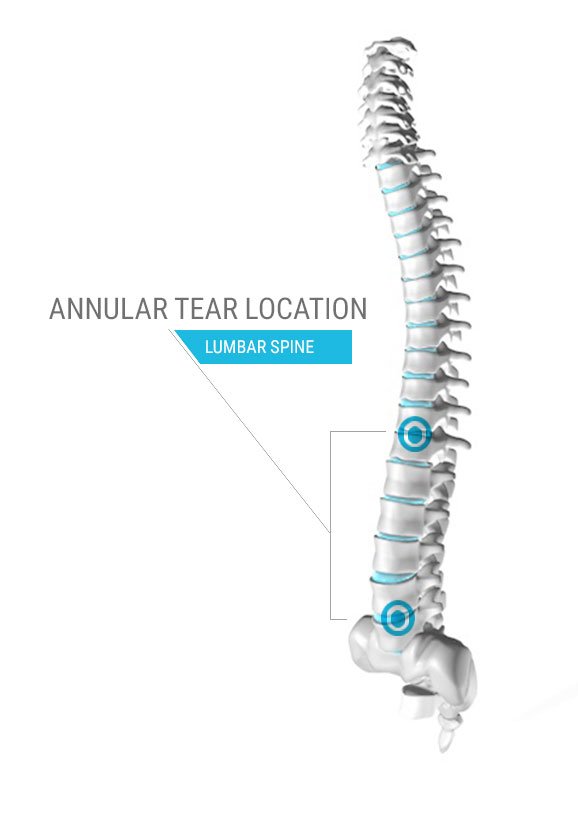
An annular tear is a tear in the ligament that connects your vertebra to your disc. This ligament surrounds the nucleus of your disc with a strong ring of cartilage fibers called the annulus fibrosus. The nucleus of your disc is a soft, jelly-like substance that acts as a shock absorber for your body. It is made to degenerate slowly over time as it endures daily impact and stress.
A tear occurs if the disc ruptures and this ligament tears. When the jelly-like nucleus of the disc pushes through the annular tear it’s called a herniated disc. When no disc material is ruptured it is referred to as just an annular tear.
Because the outer annular fibrosus ring contains many nerve fibers, tears can be extremely painful. Although an annular tear will normally heal itself over time, it is susceptible to future weakness and tears causing some sufferers to seek the help of doctors or surgeons.
Contact the professionals at Comprehensive Spine Institute today to learn more about annular tear treatments in Tampa, FL.
Types of Annular Tears
- RADIAL TEAR: Radial annular tears begin at the center and extend out through the other layers surrounding the disc. Typically caused by the natural aging process, these tears can cause disc herniation where the inner, gel-like layer seeps through the tear outside the disc.
- PERIPHERAL TEAR: Peripheral annular tears are tears that begin on the tough outside layers of the ligament surrounding the disc. These are often caused by traumatic injury and are sometimes referred to as transverse tears.
- CONCENTRIC TEAR: Concentric annular tears are tears that begin between the layers of the ligament surrounding the disc. These are often caused by trauma or degeneration and can result in separation of the layers.
What are the symptoms of an Annular Tear?
Pain is the number one symptom, but the degree of pain depends on the severity of the tear. Patients may only feel pain when they bend or move in a certain direction. Others complain the pain is so excruciating they are bedridden. On the contrary, some patients feel no pain at all. Below is a list of common symptoms associated with annular tears:
- Back Pain
- Neck Pain
- Radiating Pain
- Sciatic Pain
- A burning sensation along spine or sciatic nerve
- Muscle weakness in neck, back, arms or legs
- Limited flexibility
- Tingling and numbness in arms or legs
What Causes an Annular Tear?
As we age, the discs in our spine start to feel the toll of supporting our weight and movement of our bodies. Although there are many causes of annular tears, the most common cause is the natural aging process. As we age, our discs become less hydrated and more brittle, making them prone to tears.
Along with aging, a tear can also be caused by:
- Traumatic event such as car accident or sports injury
- Improper lifting or movement
- Repetitive motions such as lifting or twisting
- Sitting for extended periods of time such as working at a desk
- Carrying excess body weight
A tear may be associated with other spine conditions such as:
- Degenerative Disc Disease
- Herniated Disc
- Spinal Stenosis
- Sciatica
- Spondylosis
- Neck Pain
- Back Pain
How are Annular Tears diagnosed?
After a full clinical exam and personal health history evaluation, patients who come in complaining of symptoms associated with annular tears are often sent for imaging to determine the cause of the pain. An MRI or CT scan can be ordered to identify the problem. MRIs are generally painless but in some cases can miss the tear. The CT discography scan uses dye to identify tears, but is often painful and may not be tolerated well by patients.
How is an Annular Tear Treated?
- Physical Therapy
- Message Therapy
- Medication
- TENS Therapy
- Epidural Steroid Injections
Frequently Asked Questions
How Long Does it Take to Recover from an Annular Tear?
Recovery time for an annular tear can vary depending on the severity of the tear and your overall health. With conservative treatment, most patients experience significant improvement within a few weeks. Recovery from surgery typically takes longer, with most patients returning to normal activities within 3-6 months.
What Can I Do to Prevent an Annular Tear?
Maintaining a healthy lifestyle can help prevent annular tears. Here are some tips:
- Maintain good posture
- Strengthen your core muscles
- Maintain a healthy weight
- Practice proper lifting techniques
How can I tell the difference between an annular tear and a muscle strain?
Muscle strain pain is typically localized and improves with rest, while annular tear pain can be deeper and radiate to other areas. X-rays can't diagnose tears, but an MRI can help differentiate. Consulting a doctor is crucial for an accurate diagnosis.
Is bed rest the best way to recover from a tear?
Modern spine medicine has moved away from prolonged bed rest. In fact, too much rest can stiffen the spine and slow down the delivery of nutrients to the disc. We recommend "relative rest"—staying active with gentle walking while avoiding the specific activities that trigger your sharpest pain.
Does an annular tear always require surgery?
No. In fact, surgery is considered the last resort. Most annular tears are managed effectively through a combination of restorative physical therapy, anti-inflammatory medications, and targeted spinal injections. Our surgeons at Comprehensive Spine Institute only recommend surgical intervention if conservative methods fail to improve your quality of life after several months or if neurological deficits appear.
Can I still exercise with an annular tear?
Yes, but with modifications. We recommend low-impact activities like walking, recumbent biking, or water aerobics. These activities increase blood flow to the spinal structures without the jarring impact of running or high-intensity interval training.
Contact Us Today
At Comprehensive Spine Institute in Tampa, we specialize in providing advanced and compassionate care for patients suffering from annular tears. Our team of highly skilled orthopedic and spine specialists, including board-certified surgeons, is dedicated to exploring all available options to help you find relief. We prioritize a conservative, non-surgical approach whenever possible, believing that the least invasive path to recovery is often the most effective.
If you are a resident of Tampa suffering from the pain of an annular tear, the Comprehensive Spine Institute offers a patient-centered approach to care, focusing on effective and lasting relief. Our commitment to exploring conservative treatments first, combined with our expertise in advanced minimally invasive surgical techniques, ensures that you receive the highest quality of care. With our team of dedicated specialists, you can be confident that you are on the right path to a pain-free and active life. Contact us today to learn more about your treatment options and begin your journey to recovery.
Call (727) 300-2537 or contact us online today to schedule an appointment and learn more about annular tear treatment in Tampa.
-
Minimal Wait TimeYou shouldn't have to wait a profound amount of time to see a physician we'll get you in, in two weeks or less.
-
Education Is KeyWe believe in educating our patients so they feel empowered when making decisions about their care.
-
4 Convenient LocationsWe are easily accessible with 4 locations that are able to provide the same quality of care.
-
Multi-Specialty PracticeWe pride ourselves on providing our patients with care from physicians who specialize in their needs.
The Latest In Orthopedics
-
 6 Exercises to Relax Your Pinched Nerve
Ever felt numbness, tingling sensations, or pain in your shoulders or arm lately? Have you experienced pain radiating ...
Read More -
Spring Back Pain: Causes and Prevention Tips
Spring is a time for outdoor activities, gardening, and getting back into exercise routines. But for many people, the ...
Read More -
The Link Between Sedentary Lifestyles and Spine Health
Many people spend most of their day sitting at a desk, in the car, or on the couch. While it may seem harmless, ...
Read More -
Failed Back Surgery Syndrome: Why It Happens and What You Can Try Next
Understanding Failed Back Surgery Syndrome (FBSS) Imagine going through spinal surgery, filled with hope that the ...
Read More


.2507221742487.jpg)